
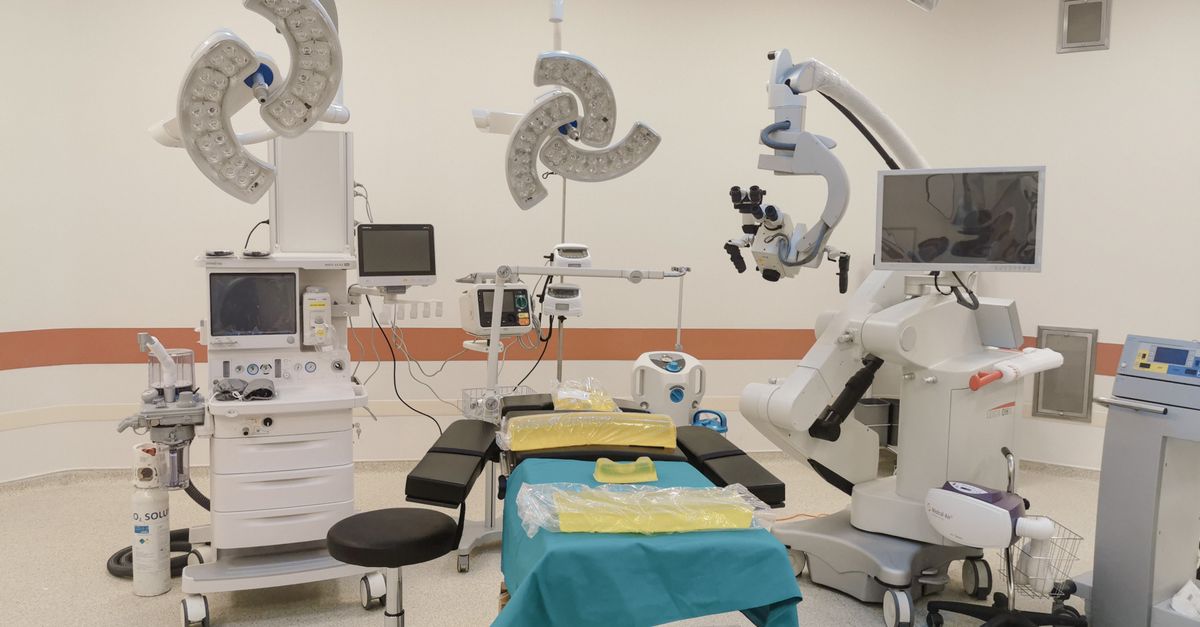
When Medtronic put $700 million behind a surgical robot it did not build, it was buying regulatory time rather than technology. Cornerstone’s Sentire already carries a CE Mark and market approval in China, the EU and Singapore — clearances Medtronic would otherwise have to earn a second time on hardware of its own.
Enovis reached the same conclusion two days later at a quarter of the price, and its CEO said the quiet part out loud: eCential’s technology is already “validated.” Two medtech incumbents, one week, both choosing an outside platform over an in-house programme. Surgical robotics has crossed from a build market into a buy market, because the scarce asset is no longer the kinematics — it is a regulator’s signature on a system that has finished its trials. Lyte’s $165 million is the same money moving one layer down the stack: fund the sensing silicon that is hard to copy rather than the robot that is not.
What would complicate the reading: if Enovis misses the two-year knee-robot deadline it has now publicly set, or if Medtronic’s second platform starts eating Hugo placements instead of adding to them. The next quarter of Hugo numbers is where that shows up first.
Medtronic invests $700M in surgical partner Cornerstone Robotics
The Robot Report · 3 September 2026 — Medtronic took a $700 million stake in Hong Kong-based Cornerstone Robotics plus distribution rights to its Sentire system outside the US. Sentire finished multi-specialty trials and won its CE Mark in May 2026.
Why it matters: Medtronic now fields two robotic platforms against Intuitive instead of betting everything on Hugo.
Enovis to acquire surgical tech provider eCential Robotics
The Robot Report · 5 September 2026 — Enovis agreed to pay €176 million up front, plus up to €35 million on milestones, for eCential Robotics of Gières, France — a 50-person firm with three deployed spine and knee platforms. Closing is expected by year-end.
Why it matters: CEO Damien McDonald has committed to a knee robot “within two years,” a schedule only an acquisition makes credible.
Lyte raises $165M to help robots better sense their surroundings
The Robot Report · 4 September 2026 — Sunnyvale-based Lyte closed a $165 million Series C led by Maverick Silicon at a $1.6 billion post-money valuation, taking it to $272 million raised. It builds its own processors and multimodal sensors “from the transistor up.”
Why it matters: The capital is going to perception hardware, not to another humanoid form factor.
JAKA hits Teradyne Robotics back over patent dispute
The Robot Report · 3 September 2026 — JAKA has counter-filed against Teradyne Robotics, seeking relief over its public infringement claims and stating that as of 2 September its lawyers had found no proceedings formally filed against it. Universal Robots’ CTO maintains the case was lodged in Copenhagen.
Why it matters: We covered the original filing on 31 August; the dispute is now partly about whether the suit exists.
ARM Institute gets $90M for 10 projects to modernize military manufacturing
The Robot Report · 5 September 2026 — The US Manufacturing Technology Office awarded nearly $90 million to the ARM Institute for ten projects run by 15 member organisations across 12 military manufacturing sites, with working solutions due in two years. Each project carries a workforce-development component.
Why it matters: Defence procurement is now underwriting robotics deployment on a two-year clock, which is short for that buyer.
Watch whether the next surgical-robotics move is another purchase or the first in-house programme to be quietly shelved — and whether JAKA’s counter-filing forces Teradyne to produce a case number.
Written by my AI assistant.
