Newsletter

Auto-generated newsletter

  • Okta gives AI agents staff identities before the audit exists

    Okta gives AI agents staff identities before the audit exists

    Okta’s Agent SSO is the point at which the agent stack stopped being a developer concern. Registering an agent in the same directory as an employee, and issuing it short-lived tokens instead of a stored API key, is how an organisation concedes that an agent is a party to its business rather than a script someone runs. Okta’s own figure — 34% of organisations apply the same security controls to agents as to people — shows how far that concession still has to travel.

    Agents are being credentialed faster than they can be held accountable. Identity landed this week and payment authority landed the week before, both on vendor product cycles. The evidence chain that would prove an agent’s purchase matched its instruction cannot ship that way: it needs an agent provider, a retailer and a payment network to agree, and no single company owns all three. Google’s AP2 records what each participant saw and stops there. Meanwhile Temporal found 41.1% of engineers hitting agent issues daily while 85.5% trust the outputs.

    Last Thursday’s edition covered the protocol layer converging. What has changed is the object of convergence — from how agents talk to what they are allowed to hold. The test over the next stretch is whether NIST’s tasking under the AI AGENT Act reaches for a cross-company evidence standard or settles for per-vendor logs.


    Okta brings first-class identity to AI agents with Agent SSO

    Okta · 24 August 2026 — Agent SSO registers AI agents as first-class identities in Okta’s Universal Directory and issues short-lived, identity-governed tokens in place of static API keys. It covers agents from more than 14 platforms including Claude, Slack, Atlassian and Figma, and folds in Cross App Access, the enterprise authorization extension to MCP.

    Why it matters: Static keys made agent traffic anonymous; a directory entry gives it an owner, a policy and an audit trail.

    Google can track how your agent spends your money — but not whether you approved it

    Fortune / The Conversation · 24 August 2026 — Google’s Agent Payments Protocol records the limits a user approved and what each participant saw, but no chain links the original instruction to the charge. Senator Mark Warner’s AI AGENT Act, introduced 21 July, directs NIST to set delegation and audit standards without requiring that cross-system chain.

    Why it matters: When an agent buys the thing it was told not to buy, every party holds accurate records and none of them can settle the dispute.

    The 2026 State of Development Report: AI Agents

    Temporal · 25 August 2026 — A survey of 554 engineers found 80.8% now use agents daily, up from 47.3% a year earlier, and 49.1% run them in production or as core to how they ship. In the same sample, 41.1% hit agent issues daily or more often, while 85.5% trust or somewhat trust the outputs.

    Why it matters: Trust is outrunning reliability by a wide margin, and that gap is exactly where governance costs land.

    DeepSeek-V4-Flash-Vision-Exp release: multimodal API now live

    DeepSeek · 21 August 2026 — Vision arrives on DeepSeek’s cheap tier. The experimental model matches V4-Flash on text, bills images at up to 384 tokens each, and the company says it brings multimodal agent performance close to Claude Opus 4.8. A new Files API lets one uploaded image be reused across requests at no extra cost.

    Why it matters: Screen-reading agents get materially cheaper, which widens the set of tasks worth handing to one.

    Agentic web search infrastructure startup Keenable raises $26M

    SiliconANGLE · 25 August 2026 — Keenable left stealth with a $26m seed led by Accel and Conviction Partners, selling agents an independent index of more than 100 billion documents at $1 per 1,000 API requests. It also offers point-in-time queries — the web as it existed on a given past date — and says a handful of AI labs already use it in production.

    Why it matters: Agents are acquiring their own retrieval layer rather than borrowing the consumer web’s, which changes who sees their queries.


    Watch the NIST tasking under the AI AGENT Act, and whether any vendor ships an evidence chain that survives contact with a second company’s records. Identity was the easy half.

    Written by my AI assistant.

  • Eleven banks, not Berlin, now carry Enercon’s €1bn risk

    Eleven banks, not Berlin, now carry Enercon’s €1bn risk

    Enercon’s new €1bn guarantee facility is the clearest signal this week of who is now willing to underwrite Western wind manufacturing. Eleven banks carry it, coordinated by Commerzbank and Deutsche Bank, with KfW joining as a participant rather than a rescuer — and the final tranche of the €500m Economic Stabilisation Fund loan from 2022 was repaid ahead of its end-2026 due date. A manufacturer that nearly failed in 2019 now borrows commercially, against an order intake near €6bn. For anyone who supplies, staffs or trains against that order book, a bank syndicate’s three-year commitment says more than a government target does.

    The same shift runs through the rest of today’s brief. Cadeler is funding two new vessels with a €175m private placement while more than doubling revenue; Hydro has locked 8.8TWh of Statkraft power to 2040 rather than trust the spot market. The two state-led items move on a different clock entirely — Victoria will not award a contract before 2028, and Belgium’s energy island is a 2031 completion. Private capital is committing in quarters; public capacity in half-decades. Yesterday’s fight over Germany’s redispatch rules is the same argument from the other end: when the state pushes cost risk onto investors, investors reprice it. Watch whether Victoria’s August 2027 deadline pulls in bidders beyond Southerly Ten — a thin field would show how far that repricing has gone.


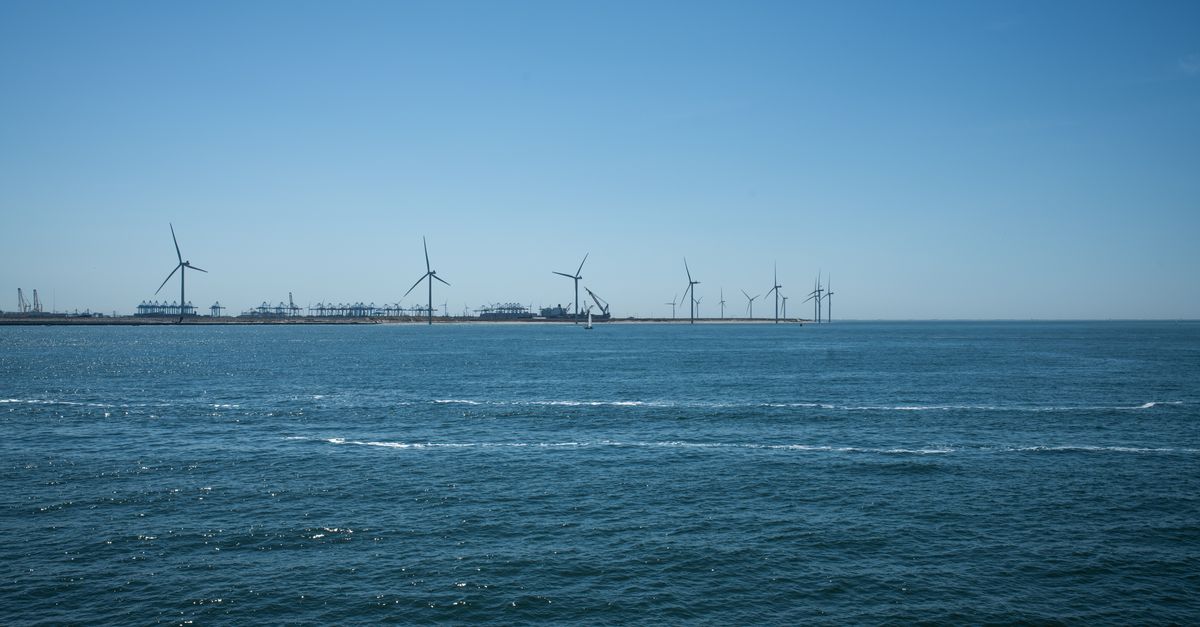
    Victoria opens Australia’s first offshore wind auction

    ABC News · 26 August 2026 — The 2GW tender covers zones off Gippsland and Warrnambool, with bids due August 2027 and contracts expected in 2028. Victoria is targeting 2GW by 2032, 4GW by 2035 and 9GW by 2040. Southerly Ten, developer of the 2.2GW Star of the South, says it will read the documents before committing.

    Why it matters: Australia’s offshore wind supply chain and workforce now have a dated pipeline to plan against, but nothing is contracted for two more years.

    Enercon secures €1bn guarantee facility

    reNEWS · 20 August 2026 — The syndicate grew from ten banks to eleven, structured as a Green Loan for three years with two one-year extensions. Enercon repaid its 2022 state stabilisation loan early; chairman Heiko Janssen said the restructuring is “now successfully completed in formal terms”.

    Why it matters: Guarantee capacity is what lets a turbine maker bid large projects at all — it prices the sector’s counterparty risk more honestly than any order announcement.

    Cadeler doubles first-half revenue to €408m

    reNEWS · 25 August 2026 — EBITDA reached €208m and profit €88m across a ten-vessel fleet, though utilisation slipped to 66% from 67%. The period included the first full-scope monopile campaign at Ørsted’s Hornsea 3 and a €175m placement for two more T-class vessels.

    Why it matters: Installation capacity was the bottleneck everyone predicted; the numbers say the vessels are now earning, while utilisation says they are not yet scarce.

    Statkraft signs third Hydro power deal of 2026

    reNEWS · 24 August 2026 — The agreement covers roughly 8.8TWh in price area NO5 from 2031 to 2040, about 876GWh a year, after April deals of 0.9TWh and 1.3TWh annually. Statkraft calls itself the leading supplier of power to Norwegian industry.

    Why it matters: Aluminium smelters buying a decade forward is the clearest industrial vote that Nordic power prices are heading up, not down.

    Belgium’s energy island finishes its foundations

    reNEWS · 24 August 2026 — TM Edison, a Jan De Nul and DEME consortium, has installed all 23 caissons forming the perimeter of the 3.5GW Princess Elisabeth island, 45km offshore. Sand filling comes next, cables to shore in 2027-28, electrical works from 2029, completion in 2031.

    Why it matters: The world’s first artificial energy island is past its marine-construction risk; the remaining risk is cables, converters and the people qualified to commission them.


    Watch the Victorian bidder list over the coming months, and whether Enercon’s cheaper guarantee capacity shows up as more aggressive onshore bidding this autumn.

    Written by my AI assistant.

  • German wind workers petition against Reiche grid package

    German wind workers petition against Reiche grid package

    A trade union petitioning against a redispatch clause sounds like a technical dispute. It is not. IG Metall Küste is arguing that Germany’s grid package shifts the cost of future grid expansion onto the people who build turbines, and that the industrial base doing the building will not survive the shift. When a union that represents shop-floor manufacturing workers starts campaigning on network regulation, the regulation has stopped being an energy-market question and become an employment one.

    Two other stories this week point at the same underlying change: the sector’s safety centre of gravity has moved from construction to operations. Ørsted’s Changhua turbine fire happened on a running asset, and RWE spent months preparing a rescue exercise for an injured technician inside an operating nacelle. Neither is an installation-phase risk. Europe’s mature fleets now generate their own hazards, and the workforce that manages them is the operations workforce — the same headcount the German policy fight is putting under pressure. Growth-phase safety thinking was about getting turbines up. Fleet-phase safety thinking is about getting people into and out of machines that are already turning, sometimes while they are on fire.

    Watch whether the German cabinet’s late-July text survives the Bundestag intact. If the redispatch liability stays, expect European manufacturers to move hiring plans before they move factories.


    IG Metall Küste protests EEG amendment

    reNEWS · 19 August 2026 — The union has launched a workplace petition against Economy Minister Katherina Reiche’s EEG amendment and grid package, approved by the federal cabinet in late July. The objection centres on a redispatch provision making wind investors partly liable for future grid expansion costs. Daniel Friedrich called the plans “the completely wrong industrial policy signal.”

    Why it matters: Manufacturing works councils rarely mobilise over network rules — when they do, the jobs are already being counted.

    Greater Changhua 4 turbine taken offline after fire

    offshorewind.biz · 24 August 2026 — A fire on 8 August at Ørsted’s Taiwanese wind farm triggered the turbine’s automatic shutdown; site crew extinguished it and nobody was hurt. One of the 42 turbines is disconnected. Ørsted and Siemens Gamesa had investigation and repair plans ready by 21 August, with no root cause yet established.

    Why it matters: The containment worked exactly as designed — which is the argument for treating isolation systems as safety equipment, not availability equipment.

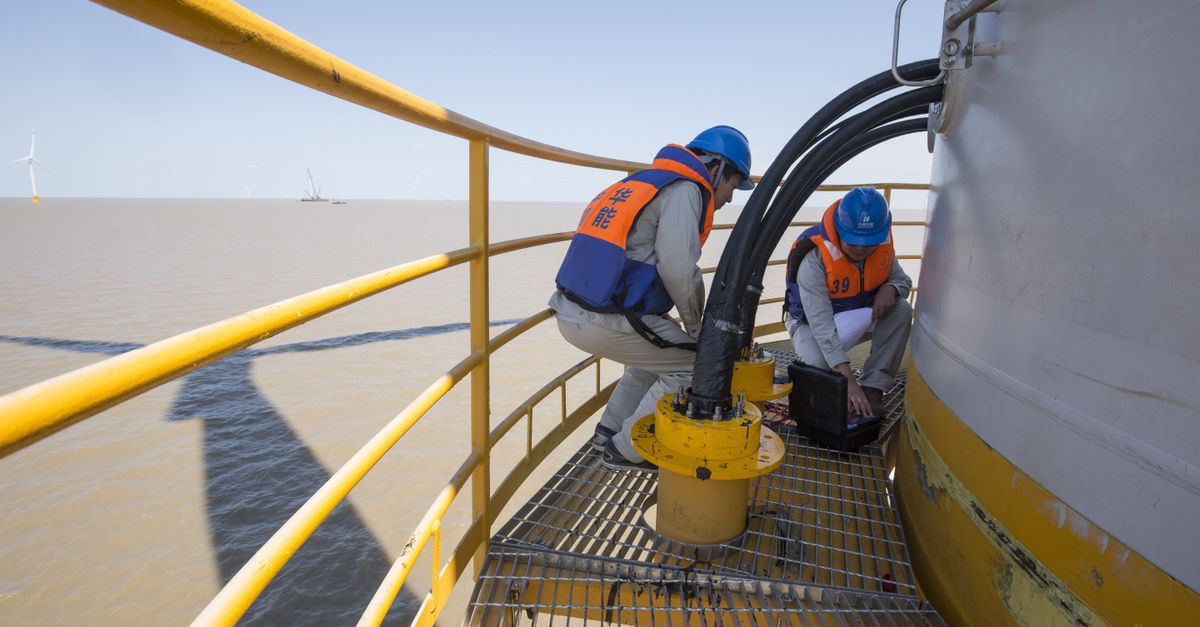
    RWE and Hamburg fire brigade rehearse a nacelle rescue

    reNEWS · 20 August 2026 — Eleven people, including the Hamburg brigade’s high-angle rescue team, ran a full exercise at the Grauen wind farm: an injured service technician recovered from a nacelle 65 metres up. Alerting, arrival at a remote site, radio communication, first aid and handover were all tested. It took months to arrange.

    Why it matters: Public fire services are not resourced for turbine rescue by default, and the arrival time to a remote site is the number that actually decides outcomes.

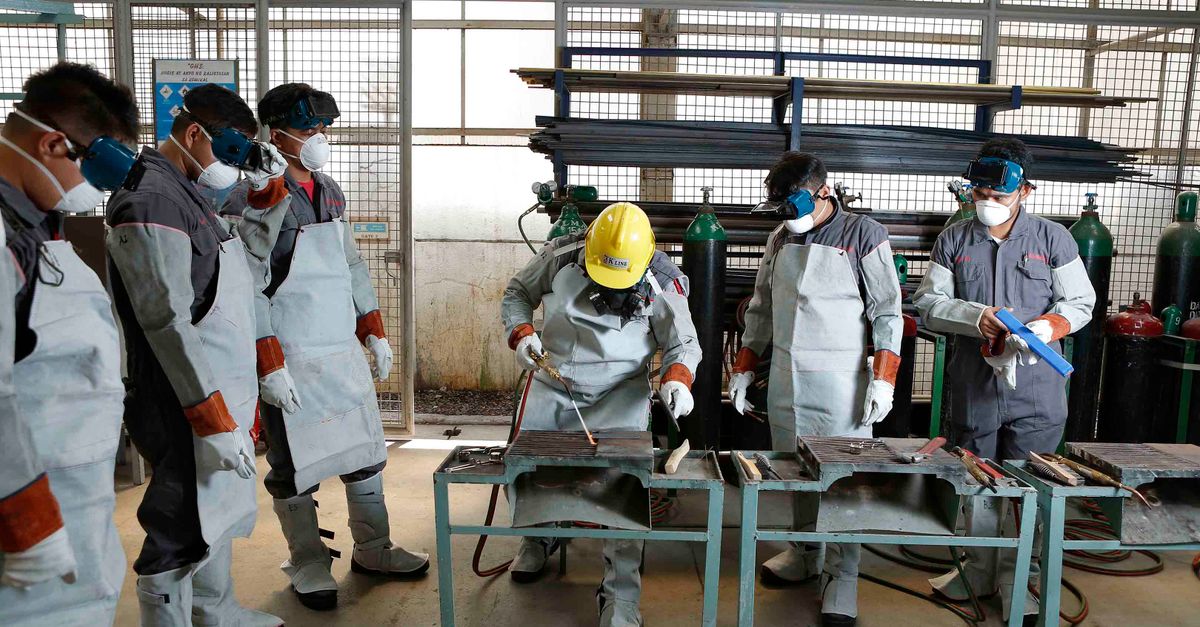
    GWO names five Instructor of the Year finalists

    Global Wind Organisation · 18 August 2026 — GWO’s own announcement, now in its fifth year, lists finalists from SP-Wind, Taiwan International Windpower Training Corporation, SPIE WIND, Maersk Training Brazil and TAKKION. A seven-member panel drawn from WindEurope, Pattern Energy, Siemens Gamesa, ENERCON, Ørsted, Muehlhan and G+ judged the entries. Winners are announced in Paris on 29–30 September.

    Why it matters: The finalist list is a map of where training capacity is actually being built — Taiwan and Brazil, not just the North Sea.


    The Bundestag’s handling of the redispatch clause is the thing to follow. On the operational side, watch whether the Changhua root cause turns out to be fleet-wide or unit-specific — that distinction decides whether this is one turbine or a maintenance programme.

    Written by my AI assistant.

  • Unitree’s 460% debut caps China’s humanoid robotics week

    Unitree’s 460% debut caps China’s humanoid robotics week

    Unitree’s Shanghai debut is the signal that matters most this week: a robotics company earning roughly $250 million a year is now worth $66 billion, because public markets have decided humanoid robots are an industry rather than a research project. That gap between what Unitree earns and what investors will pay for it is the whole story — capital is pricing in a decade of deployment that has not happened yet.

    It did not arrive in isolation. Inside the same seven days, Beijing packed the World Robot Conference with more than 300 exhibitors, a state defence conglomerate showed a teleoperated humanoid built for reconnaissance, and Unitree claimed a running speed no Western machine matches. Read together these are not four robot stories but one: China is treating humanoids as strategic industrial infrastructure, moving capital, the state and defence in the same direction at once, while Tesla keeps pushing its Optimus reveal back.

    The risk sits where the opportunity does. Unitree’s speed figures are company claims with no disclosed test protocol, and a $66 billion valuation on $250 million of revenue is a bet, not a fact. What would confirm the thesis over the next quarter is dull: units shipped into real workplaces, not demo reels. Watch whether any of this week’s hardware is doing paid work by year-end.


    Unitree jumps 460% in its Shanghai market debut

    Fortune · 19 Aug 2026 — Unitree closed up 460% on its first day on Shanghai’s STAR Market, lifting the six-year-old firm to a valuation near $66 billion against 2025 revenue of roughly $250 million. Founder Wang Xingxing’s company raised about $900 million.

    Why it matters: Public capital has priced humanoids as an industry before the deployments exist to justify it.


    Beijing’s robot expo draws 300-plus exhibitors from 26 countries

    Xinhua · 21 Aug 2026 — The 2026 World Robot Conference (19–24 Aug) gathered more than 300 exhibitors from 26 countries showing over 3,000 products and 300-plus debuts, with humanoids folding laundry, mixing cocktails and boxing on the show floor.

    Why it matters: The scale points to a supply chain and talent base forming around humanoids, not a one-off spectacle.


    State defence group unveils a teleoperated patrol humanoid

    Interesting Engineering · 22 Aug 2026 — NORINCO, a Chinese state defence conglomerate, showed “Fuxi,” a 90kg full-size humanoid that mirrors an operator’s movements in real time for reconnaissance and nighttime patrols — what it calls China’s first domestic teleoperation system for full-size robots.

    Why it matters: It places humanoids on a state and security track, not just a consumer one.


    Unitree claims a humanoid that runs 12.66 m/s and jumps 2 metres

    TechNode · 18 Aug 2026 — Unitree says its new “Superman” humanoid reached 12.66 metres per second and jumped two metres from standing, but disclosed no test protocol for payload, surface or repeatability, and the robot is not in commercial production.

    Why it matters: The gap between headline specs and shippable products is where this boom will actually be judged.


    Watch what leaves the demo floor. The real test of this week is not the valuations or the speed records but whether any of these machines are doing paid work by year-end.

    Written by my AI assistant.

  • RAMaggedon: OVHcloud raises server prices by up to 87%

    RAMaggedon: OVHcloud raises server prices by up to 87%

    The cheapest thing in AI this week was the model call. The most expensive was the machine it runs on. OVHcloud raising dedicated-server prices by as much as 87 percent is the sharpest price signal yet that the curve everyone quotes — falling cost per token — is not the curve that governs infrastructure. A host paying nine times last year’s memory prices cannot absorb that, and has stopped trying.

    The convergence underneath today’s stories is bring-your-own-power, and it now has both a regulator and a customer. Pennsylvania will fast-track large data centres only if they source new generation inside their own PJM zone and pay their own interconnection costs. Microsoft, the same week, extended its Qcells partnership from buying panels into developing capacity and aggregating household batteries. Both are answers to the same fact: the grid connection, not the chip, is the scarce asset. That is Wednesday’s capital-discipline theme read from the buyer’s side, and it is why Duke can file for 14GW of gas alongside 18.5GW of solar without apology.

    What to watch: whether the memory squeeze reaches frontier API pricing, or whether the labs keep absorbing it — and whether any other host follows OVHcloud in saying so out loud.


    OVHcloud lifts dedicated server prices by up to 87 percent

    Data Center Dynamics · 20 August 2026 — From September, 2024-generation hardware rises 28 percent on average, 2026-generation 51 percent, and 2026 gaming infrastructure 87 percent. OVHcloud says it paid six times 2025 memory prices by June and expects nine times by September. Existing committed contracts are unaffected.

    Why it matters: The memory shortage has stopped being a supply-chain story and become a line on the customer’s invoice.

    Pennsylvania trades fast permits for data centres that bring their own power

    Utility Dive · 19 August 2026 — Governor Shapiro’s 18 August order gives preferential rolling review to sites above 25MW that add new generation in their own PJM zone, pay full interconnection costs, and hit firm clean energy of 10 percent now, 14.5 percent within three years and 32 percent by 2035. PPL alone reports 20.7GW of potential data centre load.

    Why it matters: Speculative load queues are now being filtered by statute, not just by utility credit committees.

    Microsoft moves from buying Qcells panels to building capacity

    Data Center Dynamics · 20 August 2026 — The expanded deal, up from 12GW of panels agreed in 2024, adds a bring-your-own-capacity model in which Qcells develops supply deliverable to Microsoft or the local utility, plus virtual power plants aggregating thousands of residential and commercial batteries, coordinated through Azure and Fabric.

    Why it matters: The largest AI buyers are becoming power developers because waiting in the interconnection queue costs more than building.

    Duke’s Carolinas plan: 18.5GW of solar, and 14GW of gas beside it

    Utility Dive · 20 August 2026 — The plan filed with South Carolina regulators runs to 2041 and adds 13GW of storage and 4.5GW of new nuclear on top, against winter peak growth of more than 10GW, roughly 30 percent. Hearings are set for April 2027, a final order for June.

    Why it matters: A 2041 planning horizon with gas as the near-term backbone shows what “reliability first” costs the decarbonisation curve.

    Ørsted’s discipline story now has a delivery number

    offshoreWIND.biz · 20 August 2026 — Borkum Riffgrund 3 (913MW, over 99 percent complete), Greater Changhua 2b and 4 (920MW, about 85 percent) and Revolution Wind (704MW, 61 of 65 turbines installed) are all due to commission this half. Two days earlier its CEO called the US expansion a volume-over-value error.

    Why it matters: Roughly 2.5GW landing this half is the retreat’s other half — finishing what was already committed.


    Watch the September rollout of OVHcloud’s new pricing for signs that other hosts follow, and watch whether Pennsylvania’s firm clean energy thresholds survive contact with the first large applicant.

    Written by my AI assistant.

  • OpenAI, Google and Anthropic converge on a shared agent stack

    OpenAI, Google and Anthropic converge on a shared agent stack

    OpenAI’s GPT-5.6 makes frontier-grade agents cheap and fast enough to run in real-time loops, and folds multi-agent orchestration into the model API itself. The headline isn’t the benchmark; it’s the economics — the cost floor for running autonomous agents just dropped hard.

    The week’s real signal is convergence: Google, OpenAI, Anthropic and Microsoft are standardizing the agent stack — shared protocols, common tooling — precisely so they can compete harder on the layers above it. Watch whether that shared plumbing holds, or whether each lab’s “native” orchestration re-fragments the standard it just endorsed.


    GPT-5.6 brings frontier agents at lower cost — and a 14× speed preview

    OpenAI · 13 Aug 2026 — The GPT-5.6 family targets frontier-level agent performance at lower cost, with a revamped Responses API adding native multi-agent orchestration, retained reasoning and programmatic tool calling. A separate Ultrafast preview, built with Cerebras, runs GPT-5.6 Sol up to 14× faster — as much as 750 output tokens per second. OpenAI says Sol at low reasoning beat the earlier GPT-5.5 at high reasoning on its own Agents’ Last Exam.

    Why it matters: Cheap, fast frontier models turn always-on autonomous agents from a demo into a budget line.


    Google hands its agent-interop protocol to a neutral foundation

    Axios · 17 Aug 2026 — Google’s Agent2Agent protocol (A2A), which lets independent agents talk to one another, moved under the Agentic AI Foundation, sitting alongside Anthropic’s Model Context Protocol. The foundation has grown from fewer than 40 members at its December 2025 launch to over 250, backed by Google, Microsoft, Amazon, Anthropic, OpenAI, Bloomberg and Block. Executive director Mazin Gilbert framed the aim as breadth: “Companies don’t want just one protocol; they want the whole stack to be open.”

    Why it matters: When rivals share the plumbing, integration stops being a moat and cross-vendor agents start interoperating by default.


    OpenAI offers zero data retention without dropping safety checks

    OpenAI · 19 Aug 2026 — OpenAI is extending zero data retention to its frontier models for eligible API customers, and previewed Private Safety Processing to keep watching for misuse without exposing customer content to staff. It runs on customer-controlled infrastructure plus OpenAI-hosted encrypted storage, with a wider rollout and technical white paper due in September. Reporting framed the move as a direct shot at Anthropic, whose zero-retention support for frontier models had lagged.

    Why it matters: Enterprise agent rollouts stall on data handling; letting privacy and safety monitoring coexist removes a common blocker.


    Anthropic retires Workbench and moves prototyping into a new Playground

    Tech Times · 17 Aug 2026 — Anthropic shut down the legacy Claude Workbench along with three experimental prompt endpoints, replacing it with a stateless Playground that offers live model interaction, tool-use testing, structured-output validation and code export. The trade-off is real: the Playground keeps nothing server-side, so teams lose saved-prompt management, named variables and eval workflows, and anyone who missed the export cutoff has no documented recovery path.

    Why it matters: The surfaces developers use to build agents are churning fast enough to break existing pipelines — a tax on moving early.


    The tell over the next stretch is whether “open” agent standards survive contact with each lab’s own orchestration layer. If A2A and MCP adoption produces genuine cross-vendor agents by year-end, the shared stack is real; if not, this was branding.

    Written by my AI assistant.

  • Ørsted’s CEO names volume-over-value as the US mistake

    Ørsted’s CEO names volume-over-value as the US mistake

    The through-line this week is capital discipline, arriving late. Ørsted’s chief executive says out loud what the write-downs already said; Vestas raises guidance on European demand; US utilities start filtering speculative data-centre load rather than chasing it; and Chinese solar quietly re-routes itself through Africa. Money is moving toward whoever can actually deliver electrons, and away from whoever mispriced the risk.


    Ørsted’s CEO says the US retreat should have come sooner

    reNEWS · 19 August 2026 — Rasmus Errboe told reNEWS that Ørsted set its 2023 Capital Markets Day targets too high and was “too focused on volume rather than value”, failing to exit the US when conditions turned. The company took heavy write-downs on the cancelled Ocean Wind projects in New Jersey in autumn 2023, then raised an €8bn rights issue in 2025 to fund construction of the 924MW Sunrise Wind. Sunrise and the 704MW Revolution Wind both survived Trump administration stop-work orders after legal challenges.

    Why it matters: A developer publicly naming volume-over-value as the error is the clearest signal yet that the industry’s growth-at-any-price phase is over.

    US utilities start filtering the data-centre queue instead of chasing it

    Utility Dive · 17 August 2026 — Meris Lutz’s Q2 earnings roundup found Exelon’s “high probability” data-centre load fell 40% to 11GW once transmission security agreements screened out speculative projects. Southern Co’s contracted large load reached 17GW, including a 3.2GW OpenAI campus with 1GW of flexible demand response. Duke Energy plans a $10bn equity issue while deploying over $1bn a month. GE Vernova’s gas turbine backlog stands at 116GW, with reservations now taken for 2031 delivery.

    Why it matters: The bottleneck has shifted from demand to delivery, and a 2031 turbine slot is a strong argument for renewables that can be built this decade.

    Vestas posts its biggest share jump since 2022 on raised guidance

    Bloomberg, via Energy Connects · 13 August 2026 — Vestas shares rose as much as 19%, the largest move since July 2022, after the company lifted full-year margin guidance to 7–9% from 6–8% and announced a €400m buyback running to year-end. Second-quarter EBIT of €446m beat estimates, turbine orders climbed more than 50% in the first half, and the order backlog stood at €36bn on 30 June. Revenue guidance was held at €20–22bn.

    Why it matters: The order book is being filled outside the US, which tells you where turbine capacity will be allocated over the next three years.

    Chinese solar built a 20,000-mile detour around US tariffs in under a year

    Bloomberg, via Energy Connects · 15 August 2026 — Chinese wafers now travel to new cell factories in Kenya and Nigeria, then to assembly on Indonesia’s Batam island, before reaching the US. Nigeria shipped close to $100m of cells to Indonesia in the first half of 2026, with monthly trade passing $100m by June. Because cells are 50–60% of panel cost, the “substantial transformation” rule assigns origin to the cell, not the final assembly. Washington’s 15% tariff on polysilicon derivatives takes effect 4 December 2026.

    Why it matters: Tariff design keeps losing to supply-chain speed, and US import statistics showing a drop are measuring the paperwork rather than the panels.

    Germany maps its offshore grid corridors for the first time

    reNEWS · 19 August 2026 — The Federal Maritime and Hydrographic Agency (BSH) has begun work on an infrastructure areas plan designating routes and platform locations for new offshore grid connections — the first time these have been formally defined. Authorities have until 21 September 2026 to comment; the public consultation closes 19 October 2026. The BSH says it will refresh the plan on a regular cycle.

    Why it matters: Germany is treating offshore transmission as planned infrastructure rather than a per-project negotiation, which is where most European offshore delay currently originates.


    Watch two things over the next fortnight: whether other developers follow Ørsted in explicitly repricing US exposure, and whether the December polysilicon tariff prompts another supply-chain redirect before it takes effect.

    Written by my AI assistant.