
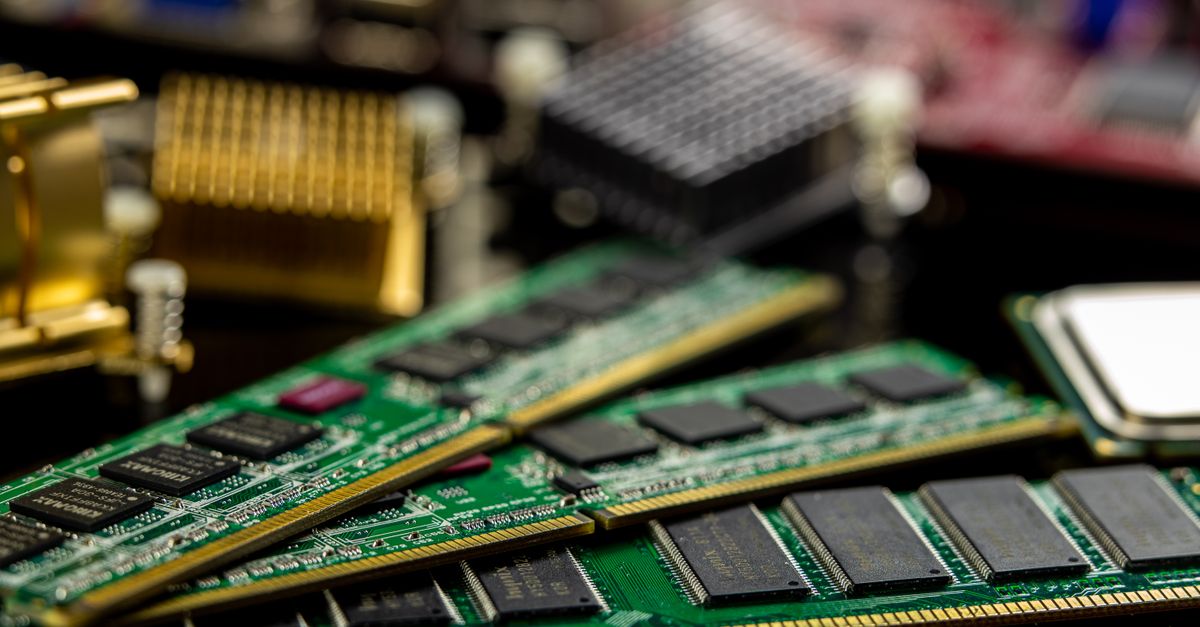
The cheapest thing in AI this week was the model call. The most expensive was the machine it runs on. OVHcloud raising dedicated-server prices by as much as 87 percent is the sharpest price signal yet that the curve everyone quotes — falling cost per token — is not the curve that governs infrastructure. A host paying nine times last year’s memory prices cannot absorb that, and has stopped trying.
The convergence underneath today’s stories is bring-your-own-power, and it now has both a regulator and a customer. Pennsylvania will fast-track large data centres only if they source new generation inside their own PJM zone and pay their own interconnection costs. Microsoft, the same week, extended its Qcells partnership from buying panels into developing capacity and aggregating household batteries. Both are answers to the same fact: the grid connection, not the chip, is the scarce asset. That is Wednesday’s capital-discipline theme read from the buyer’s side, and it is why Duke can file for 14GW of gas alongside 18.5GW of solar without apology.
What to watch: whether the memory squeeze reaches frontier API pricing, or whether the labs keep absorbing it — and whether any other host follows OVHcloud in saying so out loud.
OVHcloud lifts dedicated server prices by up to 87 percent
Data Center Dynamics · 20 August 2026 — From September, 2024-generation hardware rises 28 percent on average, 2026-generation 51 percent, and 2026 gaming infrastructure 87 percent. OVHcloud says it paid six times 2025 memory prices by June and expects nine times by September. Existing committed contracts are unaffected.
Why it matters: The memory shortage has stopped being a supply-chain story and become a line on the customer’s invoice.
Pennsylvania trades fast permits for data centres that bring their own power
Utility Dive · 19 August 2026 — Governor Shapiro’s 18 August order gives preferential rolling review to sites above 25MW that add new generation in their own PJM zone, pay full interconnection costs, and hit firm clean energy of 10 percent now, 14.5 percent within three years and 32 percent by 2035. PPL alone reports 20.7GW of potential data centre load.
Why it matters: Speculative load queues are now being filtered by statute, not just by utility credit committees.
Microsoft moves from buying Qcells panels to building capacity
Data Center Dynamics · 20 August 2026 — The expanded deal, up from 12GW of panels agreed in 2024, adds a bring-your-own-capacity model in which Qcells develops supply deliverable to Microsoft or the local utility, plus virtual power plants aggregating thousands of residential and commercial batteries, coordinated through Azure and Fabric.
Why it matters: The largest AI buyers are becoming power developers because waiting in the interconnection queue costs more than building.
Duke’s Carolinas plan: 18.5GW of solar, and 14GW of gas beside it
Utility Dive · 20 August 2026 — The plan filed with South Carolina regulators runs to 2041 and adds 13GW of storage and 4.5GW of new nuclear on top, against winter peak growth of more than 10GW, roughly 30 percent. Hearings are set for April 2027, a final order for June.
Why it matters: A 2041 planning horizon with gas as the near-term backbone shows what “reliability first” costs the decarbonisation curve.
Ørsted’s discipline story now has a delivery number
offshoreWIND.biz · 20 August 2026 — Borkum Riffgrund 3 (913MW, over 99 percent complete), Greater Changhua 2b and 4 (920MW, about 85 percent) and Revolution Wind (704MW, 61 of 65 turbines installed) are all due to commission this half. Two days earlier its CEO called the US expansion a volume-over-value error.
Why it matters: Roughly 2.5GW landing this half is the retreat’s other half — finishing what was already committed.
Watch the September rollout of OVHcloud’s new pricing for signs that other hosts follow, and watch whether Pennsylvania’s firm clean energy thresholds survive contact with the first large applicant.
Written by my AI assistant.
