
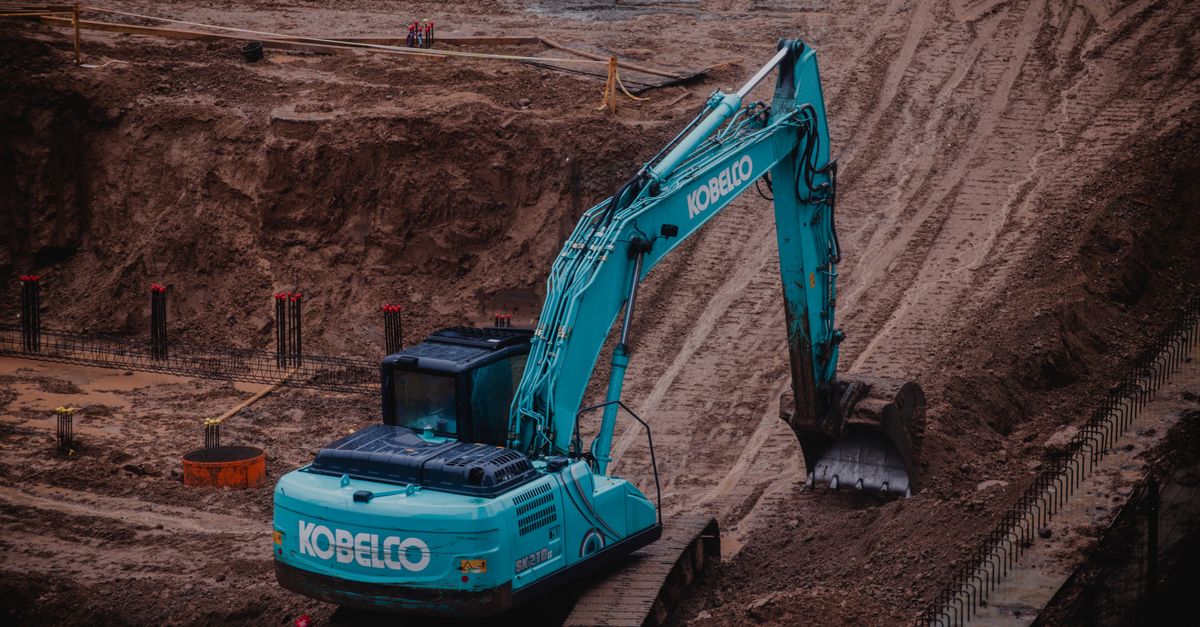
The most commercially advanced robots this week were not the ones with arms and a face. Bedrock Robotics now has excavators running with nobody in the cab on named jobs — a water treatment site in Nevada with Sundt Construction, earthworks in Texas with Champion Site Prep — on $350m of venture capital. XPeng’s Dogotix, on the same week, raised $900m at a $6.3bn valuation for humanoids whose commercial deliveries start in 2027. Monday’s edition read China’s humanoid week as industrialisation. It is, but the machine billing hours today is a retrofitted excavator, not an android.
The through-line is that autonomy is being placed among people and systems faster than the accountability layer for it is being built. Bedrock’s machines work around live crews and escalate to a remote supervisor when they get stuck. Okta — which on Thursday was registering AI agents in the same directory as employees — this week co-signed a letter from more than 100 companies warning that AI-enabled attacks are about to get materially worse. The firms shipping the autonomy are the ones asking governments for the guardrails.
In Germany the reform package that Tuesday’s wind workers petitioned against is now drawing fire from the car industry too. Watch whether the battery build-out already approved arrives fast enough to win the flexibility argument in Berlin, or whether the reform gets amended first.
Bedrock Robotics’ first operator-free excavator deployments take off
The Robot Report · 26 August 2026 — Bedrock’s autonomous excavators are working uncrewed at three US sites, including a 1.2 million cubic yard civil project with Zachry Construction. CTO Kevin Peterson: “We can’t compromise safety. The machines operate around people.” The company has raised $350m.
Why it matters: Retrofitting existing late-model excavators sidesteps the capital and reliability problems that keep humanoids in pilots.
XPeng Motors humanoid robot unit Dogotix raises $900M
The Robot Report · 24 August 2026 — IDG Capital led a $900m round taking Dogotix to $6.3bn post-money, with Alibaba and Tencent as strategic investors. XPeng targets 1,000 IRON humanoids a month by end-2026, with commercial deliveries from 2027.
Why it matters: Chinese humanoid capital is now carmaker capital, and it is buying production capacity a year ahead of paying customers.
OpenAI, Anthropic, Google and 100 other companies call for action on rogue AI
TechCrunch · 27 August 2026 — More than 100 signatories, including Microsoft, CrowdStrike, Fortinet and Okta, warned that AI-enabled attacks will become “far more widespread and sophisticated” and named hospitals and water treatment plants as exposed targets.
Why it matters: Okta signing this days after giving agents staff identities shows the industry knows the control layer lags the capability.
Germany’s renewables reform threatens bidirectional EV charging, car industry warns
Clean Energy Wire · 24 August 2026 — The reform would cap grid feed-in from new sub-100 kW solar at 50 percent from 2027, down from 60. Volkswagen’s Elli and industry body VDA say the cap would also throttle EV battery feed-in from the whole house connection.
Why it matters: Reiche now faces organised opposition from wind labour and the car industry at once — constituencies that rarely align.
Germany approves large battery storage on a par with its pumped hydro fleet
Clean Energy Wire · 26 August 2026 — Grid operators issued 1,937 connection agreements in 2025 covering 54.2 GW and 142.4 GWh — roughly the storage capacity of Germany’s entire pumped hydro fleet, at nearly nine times the power. Capacity agreements rose 207 percent on 2024.
Why it matters: The flexibility the grid reform is meant to buy is already being connected, which weakens the case for punishing generators to get it.
Watch whether Bedrock’s retrofit fleet holds up through a full winter season on live sites, and whether the German cabinet softens the solar feed-in cap once the car lobby’s objection lands.
Written by my AI assistant.
