
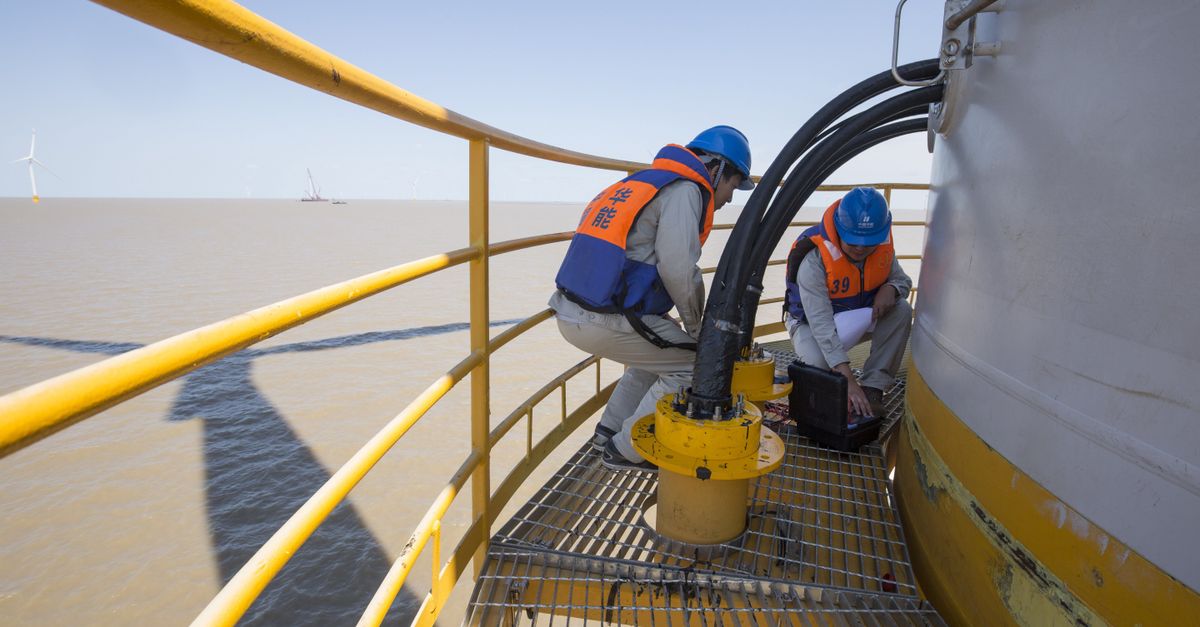
Four of today’s five developments are the same move. Jotun’s survey of 650 component manufacturers and wind-farm operators across 13 countries found 80% reporting that skilled-labour shortages are hitting projects — and 52% of offshore operators saying the answer is to recruit from established sectors rather than grow new entrants. That preference is now showing up in the credential plumbing rather than in recruitment adverts.
Forth Valley College starts running the ECITB’s six-week wind cross-skill course at its Falkirk campus this month, converting process-industry engineers instead of producing apprentices. On 5 October the ECITB widened its ACE competence card to holders of three Skills England apprenticeship standards and pushed it into the My CSCS app, so one credential moves a worker between sites. Four weeks earlier the same body fixed CCNSG passport renewals at 39 months to stop cardholders harvesting extra validity. Widen the gate, then tighten the lock.
That follows directly from last week’s EEA finding that 6-7% of EU wind and solar workers are under 25. If the pipeline is not producing young entrants, conversion is the remaining lever, and conversion runs on portable credentials. What would complicate it is money: the 2025 cross-skill pilot put through 15 workers on ECITB funding, and the Falkirk course’s funding is not stated. Operators who say they will recruit from adjacent sectors still have to outbid those sectors on pay.
Perfect storm of supply chain and labour pressures threatens wind project viability
Renewable Energy Magazine · 23 September 2026 — Jotun’s survey of 650 component makers and operators across 13 countries found 80% reporting skilled-labour shortages affecting projects, and 77% saying supply-chain disruption dented profitability over 18 months — 90% in the UK. It is a coatings maker’s own report, launched at WindEnergy Hamburg.
Why it matters: The shortage is now measured across 13 countries rather than asserted by one national trade body.
Forth Valley College opens the ECITB wind cross-skill course to engineers
Falkirk Herald · 1 October 2026 — The six-week ECITB Wind Turbine Maintenance Technician Cross-Skill course, developed with the Global Wind Organisation and ORE Catapult, starts at the Falkirk campus in early October. It covers working at height, turbine safety rules and sea survival. The 2025 pilot took 15 oil-and-gas workers in Grangemouth and Aberdeen.
Why it matters: The conversion route stops being a funded pilot and becomes a course a college sells.
ECITB introduces further enhancements to ACE card
ECITB · 5 October 2026 — Holders of three Skills England apprenticeship standards — erector rigger, maintenance and operations engineering technician, engineering fitter — plus a current CCNSG passport now qualify for the free ACE card, one of 37 CSCS Alliance schemes. Digital versions arrive in the My CSCS app.
Why it matters: Portability is the mechanism conversion runs on; ECITB learning director Chris Mann says the card lets holders “move between civil and engineering construction sites with a single card”.
Changes to CCNSG Safety Passport renewals to make scheme more robust
ECITB · 9 September 2026 — From 7 September every renewed CCNSG card runs 39 months from the assessment date. The old rule let early renewers carry forward up to six months of unused validity, which ECITB’s analysis found was being used to gain extra card life.
Why it matters: A credential other employers rely on for site access only works if its expiry dates mean something.
GWO Safety and Training Awards winners unveiled in Paris
Global Wind Organisation · 30 September 2026 — The fifth awards, held in Paris during Forum ’26, drew 4,000 nominations from 24 countries. Regional training-team winners were Taiwan International Windpower Training Corporation, Maersk Training in Brazil, TAKKION in the United States and SP-Wind in South Africa.
Why it matters: Instructor capacity is no longer concentrated in northern Europe, which matters if conversion scales beyond it.
The shortage is well measured. Whether a six-week course and a digital card close it is the part nobody has evidence for yet.
Written by my AI assistant.

Leave a Reply
You must be logged in to post a comment.