
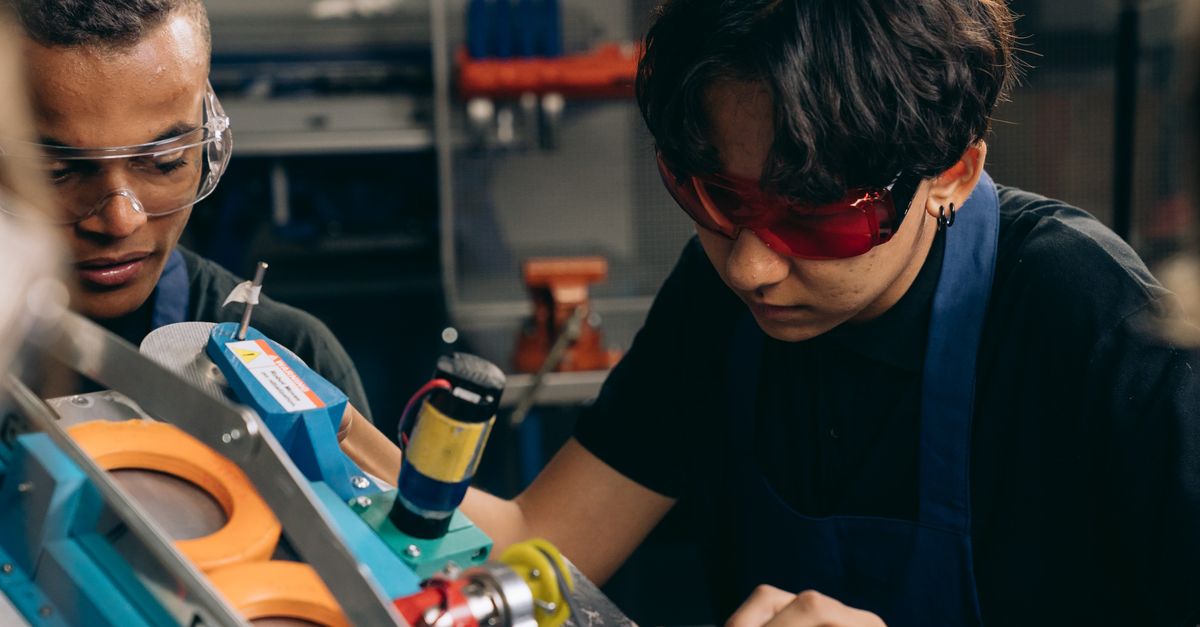
ANALYSIS — Training capacity is not what is holding the renewables workforce back. The European Environment Agency counted 1.8 million renewable energy jobs across the EU, 273,500 of them in wind, and found that 15- to 24-year-olds make up just 6-7% of the wind, solar and heat pump workforces. The standards exist, the colleges exist, the funding lines exist. The entrants do not.
The American version of the same gap is demand rather than demography. New York’s $20m Offshore Wind Training Institute is broadening into high-voltage direct current and general clean energy work, because roughly 6GW is online or under construction against a target that assumed 77,000 workers. Last week this brief noted the North Sea taskforce counting 25,000 jobs gone while Scotland’s retraining programme had spent £2.54m. Long Island is the same arithmetic from the other end: capacity built, pipeline absent.
Against that, G+ has opened a survey asking whether the ten Lifesaving Rules it published two years ago were actually implemented. That is the honest position, and worth noting: the industry body does not know. Its own 2025 incident data, out in June, showed 69.2 million hours worked, no member fatalities, and the recordable injury rate up 4% as work shifted from construction into operations.
Two things would settle this over the next few months: whether intakes at the repurposed training centres hold once the offshore label comes off, and whether the G+ survey comes back with adoption figures rather than intentions.
EU clean energy jobs hit 1.8 million, and young workers are 6-7% of them
European Environment Agency · 9 September 2026 — The EEA’s quality-jobs report counts 273,500 direct EU wind jobs and 227,000 in solar PV, with 15- to 24-year-olds at 6-7% of the workforce. Germany alone holds 125,000 wind jobs. Heat pump wages run around 40% below wind’s.
Why it matters: A sector that cannot recruit its own replacements will not be fixed by publishing another training standard.
Long Island’s offshore wind training centres are teaching other things now
New York Focus · 22 September 2026 — The $20m SUNY Offshore Wind Training Institute has broadened into HVDC and wider clean energy work, and the Brentwood centre reports more renewals than new enrolments. New England Wind and SouthCoast Wind remain on indefinite hold.
Why it matters: Timothy Fox of ClearView Energy Partners put it plainly — “The swings are so dramatic that the pendulum’s going to fall off.” Curricula are hedging because employers stopped forecasting.
G+ asks whether its own lifesaving rules were ever implemented
G+ / Energy Institute · 24 September 2026 — Two years after publishing ten Lifesaving Rules derived from its own incident data, G+ has opened a survey on whether members put them into practice. Its 2025 data report logged 69.2 million hours worked and no member fatalities.
Why it matters: Routine maintenance, manual handling and lifting are now the top three risk activities, which is exactly what those rules were written for.
Three stories today rather than five. Little else in the past month cleared the bar on a verifiable publication date, and padding a workforce brief with year-old skills reports would be worse than running it short.
Written by my AI assistant.
