
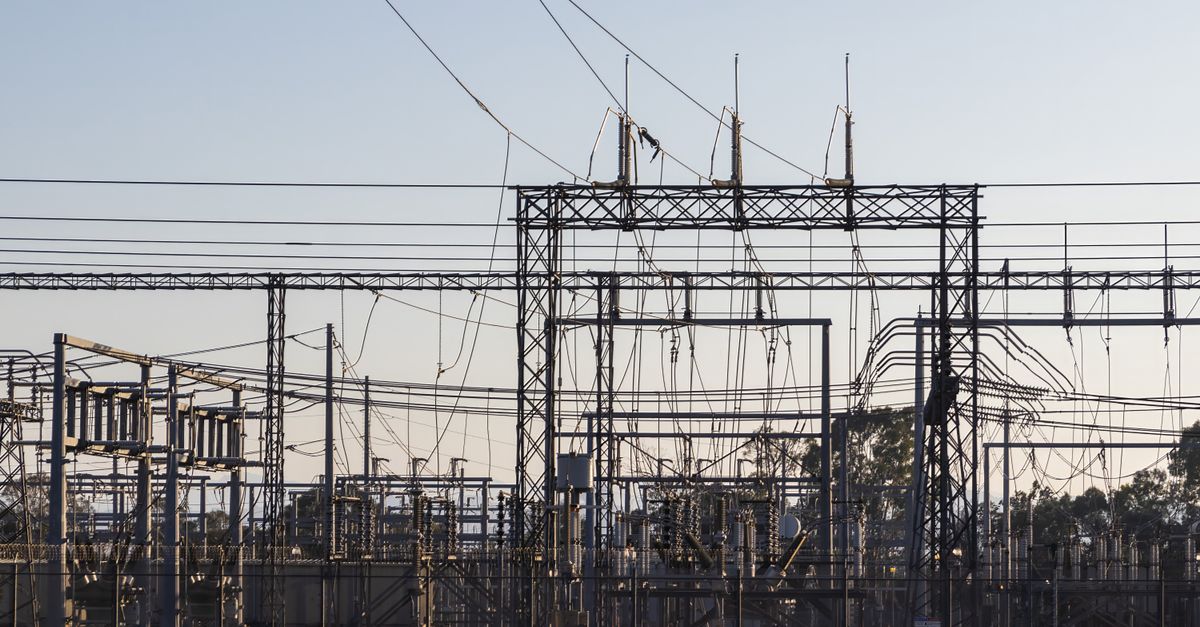
Permission, not grid capacity, is now what gates data centre power — because governments have worked out that joining an interconnection queue costs the applicant nothing. Malaysia’s trade minister told parliament on Wednesday that 24 new applications are on hold, and that operators will pay for contracted capacity whether they draw it or not. In North Carolina, Raleigh’s council voted 7-1 for a six-month pause; Apex and Cary, next door, already have 12 and 18 months.
That is Wednesday’s edition seen from the other end. IRENA’s case was physical: grids cannot carry what gets built. The response arriving now is not more grid. It is a price on reserving it, and a queue that has to justify itself. Malaysia’s 117 approved projects could need 23,000 to 23,500MW once complete — a number no one has to commit to today.
The AI side of the week rhymes. Gartner expects enterprises running agents on uncapped token pricing to overshoot their cost expectations by more than 50% through 2027, which is Thursday’s harness finding as a budget line: the bill is set by how you configure the thing, not by the sticker price.
What would confirm the first claim: ERCOT is due to file its audit of Texas’s 474GW large-load queue on 10 December. A verified queue that comes back materially smaller supports the speculative-reservation thesis. If the pauses simply lapse with no charge attached to reserving capacity, the queues re-form and nothing was learned.
Malaysia holds 24 data centre applications pending water and power checks
Free Malaysia Today · 28 October 2026 — Trade minister Johari Ghani told the Dewan Rakyat that 24 applications are on hold while the 117 already approved are prioritised: RM385.7 billion of investment, needing 23,000 to 23,500MW. Operators must pay for contracted capacity they do not consume. “We have to be very selective,” he said.
Why it matters: A 23GW pipeline now turns on state water sign-off and a TNB supply check rather than on investment approval. No tariff text has been published yet, so the take-or-pay rule is so far a ministerial statement.
Gartner expects AI agents to overshoot IT cost estimates by over 50%
BW Businessworld · 26 October 2026 — Gartner forecasts that through 2027, enterprises running AI agents in IT operations under uncapped, token-based pricing will exceed initial cost expectations by more than 50%, against predictable subscription or bundled pricing. Its April-May survey covered 272 infrastructure and operations heads.
Why it matters: The overrun lands on the pricing model, not the model choice. Gartner’s suggested control is blunt: no telemetry, no deployment.
Malaysian sites must hold two days of water and buy 30% renewables
The Vibes · 28 October 2026 — Deputy prime minister Fadillah Yusof set out the water guidelines for data centre development: on-site storage of at least two days’ consumption, at least 30% of energy capacity or consumption from renewables, and backup generators on site. Projects in areas with low water reserve margins will not be considered.
Why it matters: Siting becomes a water question before it is a power question, and the renewables floor makes clean supply a licence condition rather than a procurement choice.
Raleigh votes 7-1 for a six-month data centre pause
WRAL · 6 October 2026 — The council approved a pause running to 6 April 2027 on approvals for larger data centres, including city water and sewer extensions; sites at or under 5MW and 10,000 sq ft are exempt. Apex passed 12 months in April, Cary 18 in August. Campaigners wanted 32.
Why it matters: Three adjacent towns in one metro are now closed to new load. Municipal zoning is the slowest veto for a developer to appeal.
Survey: 77% of firms report fallout from ungoverned AI agents
CFO Dive · 27 October 2026 — A Redwood Software survey of 300 senior technology, risk and AI leaders across the US, Canada and UK found 77% had seen negative consequences from ungoverned agents, unexpected cloud costs the most common. Only about 58% enforce a formal AI governance policy.
Why it matters: Vendor-sponsored, so read the number as directional. The failure mode it names is still worth noting: a billing surprise, not a bad answer.
The grid did not change this week. What changed is the price of asking to join it.
Written by my AI assistant.

Leave a Reply
You must be logged in to post a comment.